Mindfulness has been a keyword for a while. Its concept is pretty simple. It’s about having awareness and mindfulness in the here and now. There is some research and much anecdotal evidence on how well it works on people. It is often recommended for anxiety, depression and stress management. Some people swear by it, and some people hate it. What is being sold is to sit still, breathe and be aware of things. I have ADHD. I find this impossible, but I do believe in mindfulness. What most people do practise mindfulness, therapists and otherwise, neglect to mention is that it is not the only way of mindfulness. I will share some of my tips for mindfulness.
The key to mindfulness is to be aware of the here and now. This includes what you feel, what you are thinking, and what is around you. You connect to the moment. It helps with anxiety as you can start to go off tangents with thinking and start to get to the bad outcomes in the moment. With depression, it’s a similar thing. You start thinking about the bad things happening right now or in the future. When you are in connection with here, and now, those will stop and help you think more clearly. It’s also very good for stress management, which is what I use it for.
One of the main types of mindfulness is breathing exercises. If you are reading my blog enough, it comes up everywhere. My favourites are box breathing or 478. I focus on the seconds. It doesn’t have to be exact. I think about the passing seconds as I breathe in, hold or breath out. This can be done almost anywhere. I often do it on the train, in waiting rooms, and walking to the clinics. For more effect, I sometimes stop and sit somewhere and close my eyes. It helps me focus more on the seconds passing.
If I need more help than just breathing, I do a progressive muscle relaxation exercise. It follows the breathing too. I start by making a fist, breathing in slowly and holding the fist for 4-7 seconds. I relax and breathe out and do it again. Then I move to the arms, forehead, and mouth. I go down to my upper neck by extending my head back, raising my shoulders, pulling my shoulders back, pushing out my stomach, and then my legs. I do a shorter, more discreet version if I am outside, though. I use this to fall asleep.
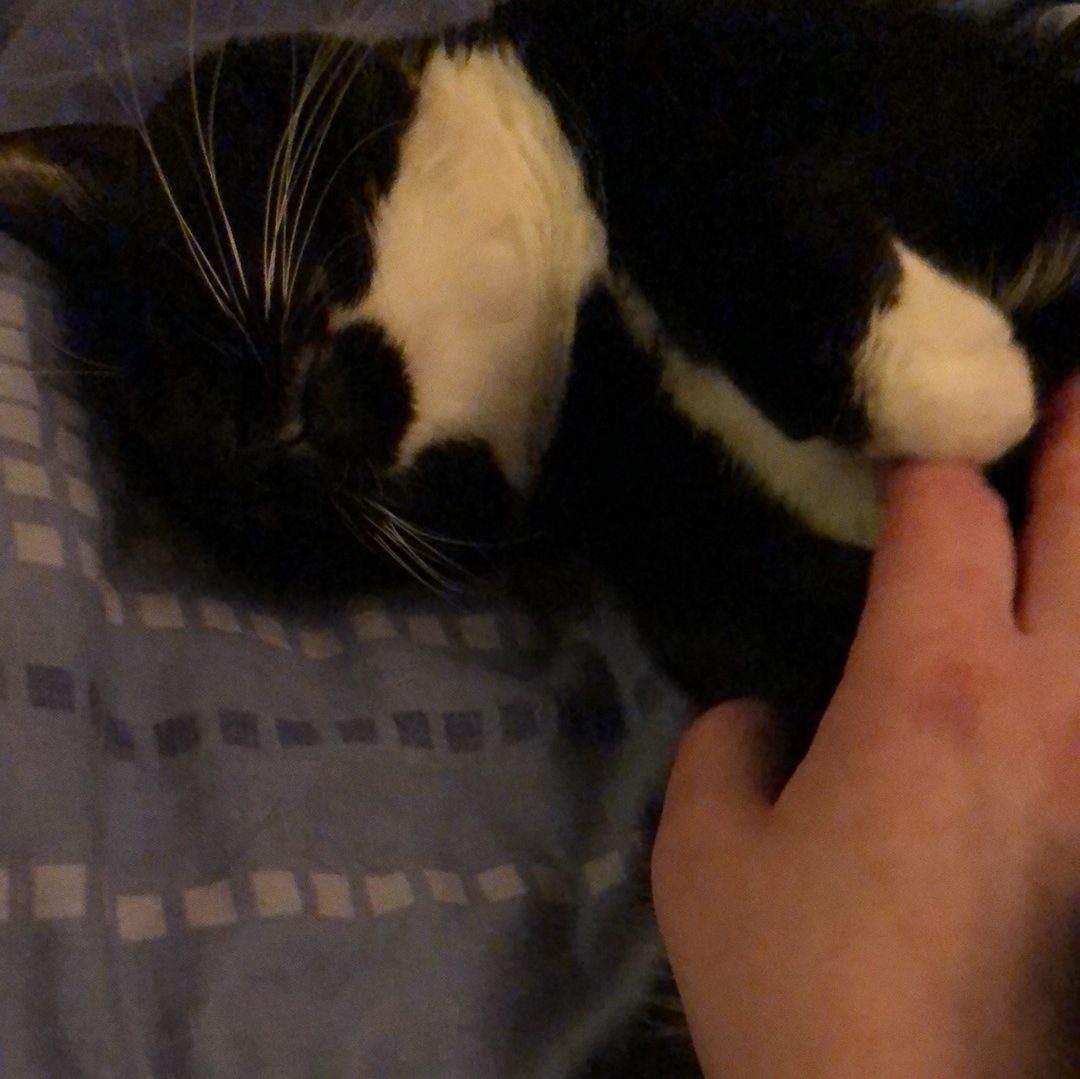
Mindfulness can be any activity you do in a day. It can be the act of making a cup of tea or coffee. Focusing on each step and taking in what your senses tell you. I prefer using my cats for this. I focus on how soft they are, on the sound of them purring, the different textures on their fur, and how they look and move. I also close my eyes some of the time. The cats love it too. One of them has a habit of bunting the phone off my hands if she doesn’t have my full attention. She has also laid down on my phone. I get the message. Also, nothing brings more awareness to the moment than a cat butt in my face.
Another version of mindfulness is yoga, pilates, Tai Chi, etc. I love mindfulness as Tai Chi. Slow controlled movements force me to focus on what my body is doing and how it feels. They all use breathing as well as timers. It doesn’t even need to be these three. I have used mindfulness at the gym before I knew what it was. I was fully focused on my form, my breathing and how many reps I was doing.
My message here is that mindfulness can be whatever you make of it. Taking part in a course is good, but not everyone will enjoy it. I didn’t. I tried two courses, and all I got was more frustrated that I couldn’t do it. I hope that my list gives you some ideas about what you can do.
 Katrina writes